Signs You Hired the Wrong Contractor
Redding Remodel Warning: 22 Signs You Hired the Wrong Contractor (2026 Guide)
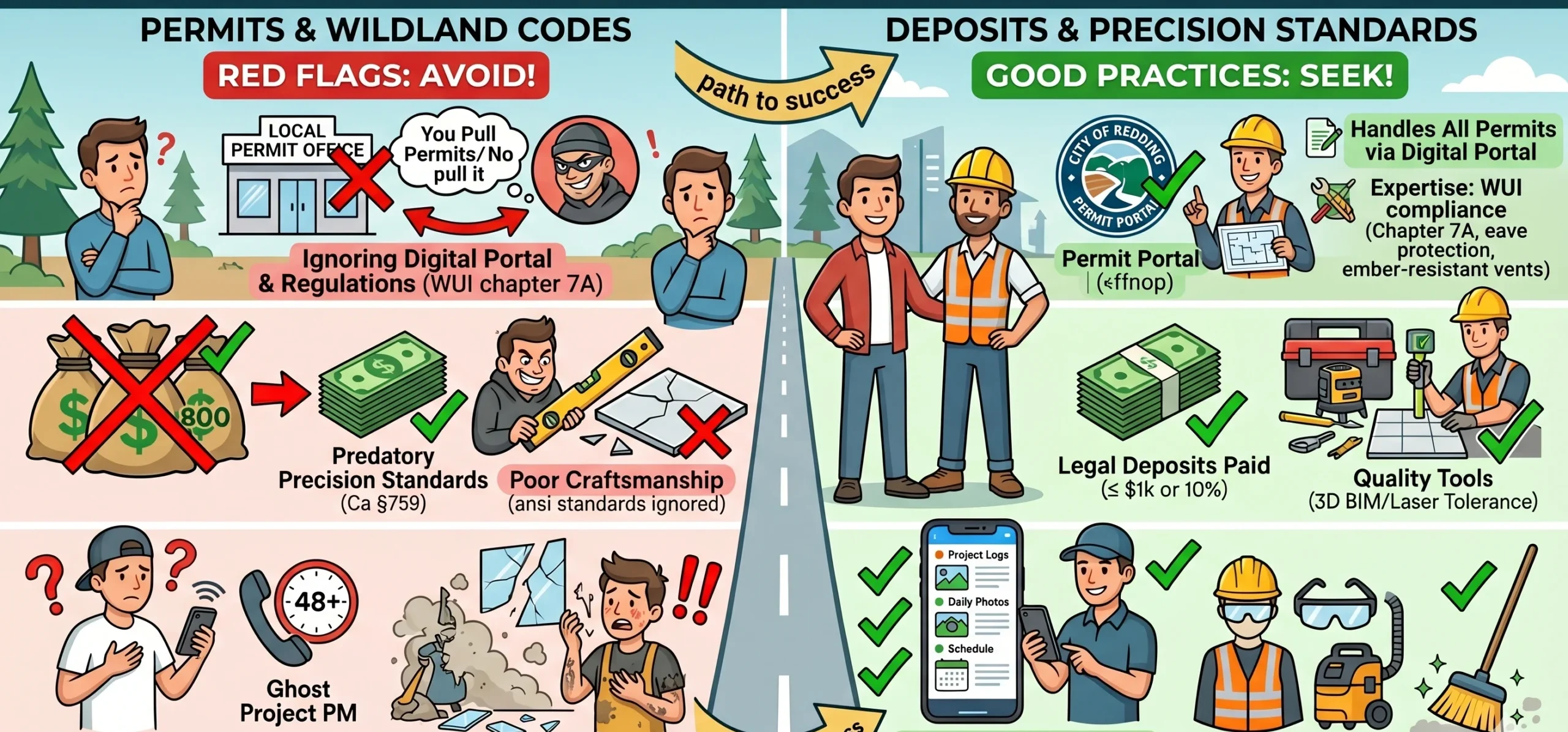
In 2026, the primary signs you hired the wrong contractor in Redding include a failure to comply with updated California Business and Professions Code 7159 regarding subcontractor disclosures, requesting more than a $1,000 down payment, and ignoring the 2026 California Energy Code heat pump mandates. A dangerous contractor in Shasta County often avoids the City of Redding digital permit portal or lacks specific Chapter 7A wildfire-resilient material expertise. If your contractor cannot provide a digital project walkthrough or refuses to use cloud-based project management for daily logs, you are working with an amateur who jeopardizes your property safety, insurance eligibility, and resale value.
Is This Guide for You?
- Redding Homeowners: Navigating a major kitchen, bath, or addition project in neighborhoods like Westridge, Sunset Terrace, or the Garden Tract.
- Fire-Zone Rebuilders: Ensuring your home hardening meets strict 2026 insurance underwriting requirements.
- The Gut-Check Client: Who feels the current project is slipping but lacks the technical vocabulary to confront the builder directly.
- Real Estate Investors: Looking to scale local property flips without falling into the low-bid trap that ruins profit margins.
Why Your Contractor Avoids the Permit Center
If your builder claims that permits just slow the project down, you are in immediate legal danger. As of January 2026, the City of Redding Building Division moved nearly all submittals to an electronic-first standard. The process is faster than ever for licensed professionals.
When a contractor asks you to pull an “Owner-Builder” permit, they are making you the legal employer of record. This means if an uninsured laborer falls off a ladder at your home, your homeowner insurance takes the hit. They shield themselves from liability while exposing you to financial ruin.
Here is what nobody tells you. Unpermitted work is no longer just a slap on the wrist. In 2026, we see a massive rise in Stop Work orders across Shasta County. A real pro handles all paperwork because they have nothing to hide from the local inspector.
Ignoring Wildfire Resilience Codes
Redding is a high-risk ignition zone. In 2026, compliance with California Building Code Chapter 7A is mandatory. It represents the difference between keeping your home insurable or facing policy cancellation.
If your contractor installs standard wood siding without an ignition-resistant underlayment, they are the wrong hire. I recently consulted on a home near Mary Lake. The “pro” installed standard roof vents instead of ember-resistant vents. The homeowner saved a few thousand on the initial bid but faced outright denial for fire insurance coverage a month later. We had to tear out the brand-new eaves and redo the ventilation. The cheap contractor always becomes your most expensive mistake.
You must demand a wildfire material plan. Check the California Department of General Services for the latest approved building materials list. If your builder looks confused by this request, fire them.
The Predatory Change Order Trap
Change orders happen on almost every remodel. You open a wall in a 1970s Redding ranch home and find galvanized plumbing. That is normal. However, the predatory change order is a massive red flag.
This happens when a contractor discovers a “major structural issue” that was glaringly obvious during the initial walkthrough. They intentionally low-ball the initial bid to win the job. Once demolition starts and your kitchen is gutted, they hit you with a massive upcharge.
Under California law, any change order must include the same subcontractor disclosures and cancellation rights as the original contract. If they scribble a new price on a scrap of drywall and demand a signature, they violate the law. A professional builder uses software like Buildertrend or Joist to issue formal, digitally trackable change orders.
The Digital Ghost Project Manager
In 2026, the ghost contractor is an epidemic. Many local outfits operate as sales companies. They land the job with a polished presentation and then disappear. They leave the actual construction to a rotating cast of unsupervised, lowest-bidder subcontractors.
If you text your project manager and do not get a response within two business hours, the communication chain is broken. Professional builders today use dedicated project management applications. You should receive daily photo logs, schedule updates, and budget tracking straight to your phone.
If your contractor says, “I will just call you when I see an issue,” they are hiding a severe lack of operational organization. They are managing your six-figure investment from the dashboard of their truck.
2026 Contractor Quality Benchmarks
| Project Metric | Red Flag (Amateur Level) | Gold Standard (Pro Level) |
| Initial Deposit | Demands 50% for materials | Max $1,000 or 10% (Legal Limit) |
| Technology Use | Paper sketches and verbal updates | 3D walkthroughs and daily app logs |
| Energy Compliance | Pushes gas only for heating | Understands mandated heat pump integration |
| Site Cleanup | Sweeps up on Fridays | HEPA-vacuumed daily for silica safety |
| Insurance Proof | General Liability only ($1M) | GL plus $2M Umbrella and Workers Comp |
Failing the Craftsmanship Level Test
You do not need an engineering degree to spot an amateur builder. You just need to know where to look and what tools they use.
In 2026, precision requires 3D laser levels. If your contractor frames an entire room addition using only a beat-up four-foot bubble level, they will not hit the tolerances required for modern cabinetry.
Run a credit card across your newly installed bathroom floor tile. If the card catches sharply on a tile edge, the lippage exceeds acceptable industry standards. This creates a severe trip hazard. It proves the tile setter rushed the substrate preparation or skipped using modern leveling clips.
When interviewing a general contractor in Redding, ask about their framing tolerances. If they say “close enough is good enough,” end the meeting.
The One Thousand Dollar Law Violation
This is the most critical legal threshold in California remodeling. Under the Contractors State License Board regulations, a contractor cannot ask for a down payment exceeding ten percent of the total contract price or one thousand dollars, whichever is less.
I watched a homeowner in the Churn Creek area pay a contractor ten thousand dollars upfront for a custom deck build. The contractor used the cash to pay off a previous supplier, skipped the lumber delivery for the new job, and vanished.
If a builder asks for half down to start a project, they are grossly under-capitalized. They use your money to fund other jobs. Never break this rule. Protect your capital.
Ignoring 2026 Energy Code Mandates
California updates its energy code on a strict cycle. The 2026 mandates heavily favor advanced electrification. A wrong contractor fights this transition because they refuse to learn new systems.
They will claim that high-efficiency heat pumps do not work in our triple-digit summer heat. This is factually incorrect. Modern variable-speed heat pumps are specifically engineered for extreme climates.
Pushing outdated gas furnaces or standard water heaters instead of hybrid heat pump models proves they have not attended a continuing education seminar in years. Check the California Energy Commission guidelines. Your contractor should be advising you on available electrification rebates, not steering you away from them.
Mid-Project Burnout and Vanishing Crews
A bad contractor often starts strong. They show up early for the first three days during demolition. Then, the timeline stretches. Tools stay on site, but the crew disappears for a week.
They suddenly claim your chosen materials are out of stock and push you toward cheaper alternatives. In reality, they broke the original materials due to poor handling and cannot afford to replace them.
Watch the cleanliness of the site. Leaving sawdust in your open HVAC returns is a massive health hazard. Silica dust causes permanent lung damage. A professional uses HEPA-filtered dust extraction systems attached directly to their saws. A hack uses a broom and leaves your house coated in toxic dust.
The “Good Guy” Liability Trap
Redding maintains a strong community feel. Many people hire a contractor because they know them from a local gym or community group. This is the “Good Guy” trap.
Early in my career, I made this mistake. I brought in a friendly acquaintance for a specialized framing task. I did not verify his workers compensation insurance because we had a personal relationship. He injured his hand on the job. I ended up paying thousands out of pocket to cover his emergency room visit and avoid a devastating lawsuit.
Kindness never substitutes for a valid Certificate of Insurance. Always verify active, in-force policies directly with the insurance carrier before anyone swings a hammer on your property.
Lack of a Comprehensive Written Scope
Verbal agreements destroy remodeling projects. Your contract must be incredibly specific.
If the contract simply says “Install new kitchen cabinets,” you are exposed. A professional contract specifies the exact cabinet manufacturer, the wood species, the hinge type, the stain color, and the installation methodology.
Ambiguity favors the contractor. When disputes arise over quality, the contractor will point to the vague contract and claim they fulfilled their obligation. Demand a line-item scope of work. If they refuse to write it down, they plan to cut corners.
Asking You to Pay Subcontractors Directly
Your general contractor is hired to manage the project and the budget. If they suddenly ask you to write a check directly to the electrician or the drywall crew, major alarms should ring.
This behavior indicates the general contractor lost their credit line with local suppliers or failed to pay their subs on a previous job. The subcontractors now demand cash on delivery.
By paying subs directly, you complicate the warranty chain. If the electrical work fails, the general contractor will blame the electrician. The electrician will claim they only worked under the direct supervision of the homeowner. You are left holding the bag.
Unprofessional Dispute Resolution
Disagreements happen on complex builds. How a contractor handles friction reveals their true character.
A wrong contractor gets defensive, raises their voice, or threatens to walk off the job when you question a detail. They use intimidation to prevent you from inspecting the work closely.
A true professional welcomes scrutiny. They explain the building code behind their decisions. They offer solutions instead of ultimatums. If you feel nervous asking your contractor a basic question about the timeline, you hired the wrong person.
The Spec-Shifting Deception
Spec-shifting is a quiet, profitable scam. You agree to premium materials during the design phase. The contractor builds the cost of those premium materials into the contract.
When installation day arrives, you notice generic boxes from a big-box retailer instead of the specialized brands you selected. The contractor swapped the premium underlayment for a cheap alternative, pocketing the price difference.
Always inspect materials upon delivery. Cross-reference the model numbers on the boxes with your contract specifications. Catching a spec-shift early prevents years of poor performance from substandard materials.
Inadequate Site Protection
Remodeling is destructive by nature. Protecting the existing home is paramount.
If your contractor starts swinging sledgehammers without masking off adjacent rooms with heavy-duty plastic barriers, they lack respect for your property. They should install impact-resistant floor protection over your existing hardwoods.
Failure to protect the site leads to collateral damage. You hired them to upgrade the kitchen, but their carelessness ruins the living room floor. Demand site protection protocols in writing before demolition begins.
The “Cash Discount” Offer
When a contractor offers a significant discount for a strictly cash payment, they are dodging taxes and hiding income.
While saving ten percent sounds appealing, paying in cash eliminates your paper trail. If the contractor abandons the project, you have zero proof of payment. You cannot dispute the charge with a bank.
Furthermore, a contractor operating strictly in cash is likely cutting corners on liability insurance and workers compensation. The perceived savings will evaporate the moment a legal or structural issue arises.
Refusal to Provide Lien Releases
In California, anyone who supplies labor or materials to your home can file a mechanics lien against your property if they are not paid. This applies even if you paid your general contractor in full.
If the general contractor pockets your money and fails to pay the lumber yard, the lumber yard can foreclose on your home.
You must collect unconditional lien releases from every subcontractor and supplier upon every progress payment. If your contractor refuses to provide these legal documents, halt all payments immediately.
Constant Rework and Tear-Outs
Measure twice, cut once. This old adage separates the pros from the amateurs.
If you constantly see the crew tearing out work they completed the day before, they lack proper planning. Rework indicates a failure to read the blueprints or a lack of coordination between different trades.
The plumber installs the pipes, but the framer built the wall in the wrong location. Now the wall must be moved. This eats into the schedule and drains the project budget. High rework rates scream incompetence.
Ignoring Manufacturer Installation Guidelines
Every building product comes with strict installation instructions.
A bad contractor relies entirely on “the way I have always done it.” They ignore the technical data sheets. For example, installing a modern waterproofing membrane in a shower requires specific overlapping techniques and approved sealants.
If the contractor uses the wrong sealant, the manufacturer warranty is voided instantly. When the shower leaks two years later, you have no recourse. A pro reads the manual.
Blaming the Client for Everything
A toxic contractor never takes responsibility. When a mistake happens, they blame the architect, the city inspector, the suppliers, or you.
They claim you changed your mind too many times. They claim your house is too old and crooked.
Accountability is the bedrock of a professional relationship. A good builder owns their mistakes, presents a remediation plan, and fixes the issue at their own expense. Deflection is the ultimate red flag.
Pressure to Make Immediate Decisions
High-pressure sales tactics have no place in custom remodeling.
If a contractor demands an immediate signature to “lock in a special price,” walk away. Reputable builders know that remodeling is a massive financial commitment. They encourage you to check their references, review the contract carefully, and make an informed decision.
Artificial urgency is designed to prevent you from doing your due diligence.
No Permanent Business Address
In the digital age, it is easy to create a polished website. However, a legitimate contractor needs a physical footprint.
If their business address is a P.O. Box or a residential home in another county, proceed with extreme caution. A local builder with a physical office or dedicated workshop is invested in the community. They cannot simply pack up and disappear overnight.
Verify their physical location. It provides a layer of security and accountability.
Your Gut Instinct Says “No”
Data, metrics, and contracts are essential. But human intuition is powerful.
If you feel anxious every time the contractor pulls into your driveway, listen to that feeling. If their communication style feels manipulative, or if they dismiss your concerns with condescending remarks, the relationship will fail.
You are inviting this person into your home for months. Trust and mutual respect are non-negotiable.
Frequently Asked Questions
Can I fire my contractor if they are chronically behind schedule?
Yes. You must check your contract for a “Time is of the Essence” clause. Most professional agreements include liquidated damages. If they miss the substantial completion date by more than fourteen days without a valid weather delay, you have strong grounds for a legal breach of contract. Document all delays meticulously.
What should I do if I already paid a massive upfront deposit?
Stop all work immediately. Document the exact state of the project with time-stamped photographs. Contact the CSLB directly. California operates a fast-track arbitration program for these exact violations. Do not give them more money hoping they will finish the job.
Is it normal for a project in Redding to face permit delays?
The local permit office experiences seasonal backlogs. However, a competent pro anticipates these delays and builds buffer time into the master schedule. If the delay is caused by the contractor submitting incomplete plans or failing to respond to city plan-check corrections, that is a massive performance failure on their part.
Why is my builder using different subcontractors every week?
High turnover on a job site indicates a toxic general contractor. The best tradesmen refuse to work for disorganized builders who pay late. If you see a new plumbing crew every few days, the general contractor is burning through relationships, and your project quality will suffer immensely.
Do I really need a building permit for a bathroom remodel?
Absolutely. Any time you alter plumbing locations, modify electrical circuits, or change structural framing, a permit is legally required. Skipping this step saves a little money upfront but destroys your ability to sell the home later when buyers demand proof of permitted work.
The Ultimate Decision Framework
Hiring the wrong contractor drains your bank account, ruins your property, and causes immense psychological stress. You must approach the hiring process like a corporate merger.
Verify the license. Demand a digital project schedule. Enforce the one thousand dollar deposit limit without exception. Protect your home from predatory change orders and spec-shifting tactics.
The right contractor acts as your fiduciary. They protect your budget, ensure code compliance, and deliver a final product that increases your home value. Do not settle for anything less than absolute professionalism. If you see the red flags, terminate the relationship before the damage becomes irreversible.
Advanced Building Horizon Watch
As we push through 2026, keep a close eye on advanced fenestration tech. Dynamic tinted glazing is becoming critical for managing solar gain on west-facing facades in Northern California. Also, watch the rapid adoption of cold-climate thermal transfer units replacing traditional forced-air combustion heating. Finally, sustainable framing alternatives, specifically cold-formed structural alloys, are gaining massive traction in wildland-adjacent zones due to their absolute non-combustibility and resistance to pest degradation. Demand a builder who understands these shifts.